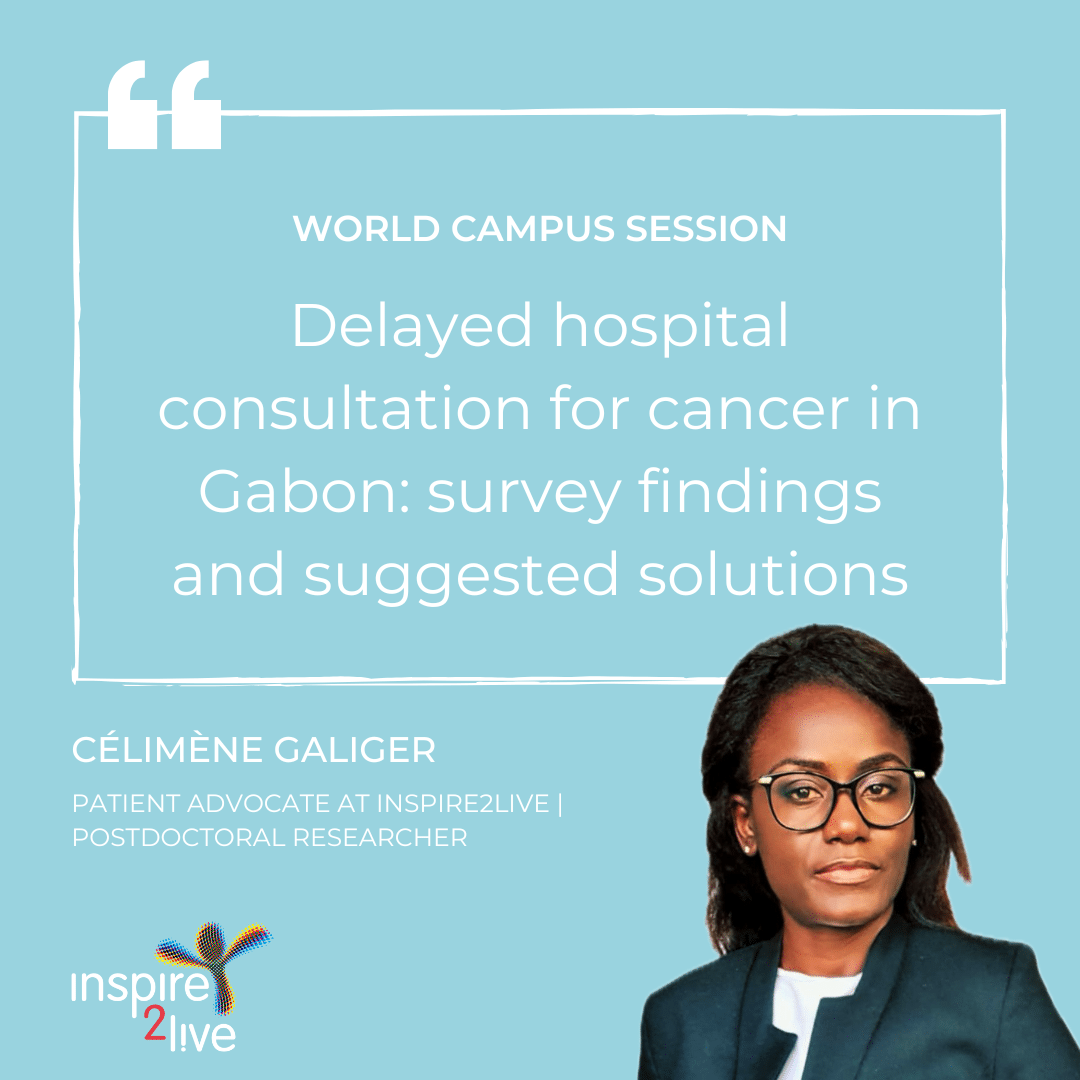
World Campus January 2026 Session (Part II)
Célimène Galiger on delayed hospital consultation for cancer in Gabon: survey findings and suggested solutions
The first World Campus session of 2026 tackled a crucial question: why are so many people diagnosed with cancer too late? Drawing on new survey data from Gabon, cancer researcher and patient advocate Celimane Galiger challenged the assumption that people simply “arrive late” – and looked deeper into the real barriers.
Based on a 2025 survey of 515 people across Gabon and the diaspora, the findings reveal major gaps in early cancer awareness. While most respondents knew about screening campaigns, over 60% had limited knowledge of early cancer symptoms, especially men, adults over 50, and people in rural areas. In remote communities, more than 80% reported no awareness at all.
So why the delay? Participants pointed to lack of information, fear of diagnosis, high costs, limited access to care, and distrust of the health system. These barriers differ by location: fear plays a bigger role in cities, while rural delays are driven by distance, access, and structural challenges.
The discussion went further, highlighting that patients often seek help early for symptoms – but health systems may fail them through missed suspicion, delayed referrals, and limited diagnostic capacity.
The takeaway was clear: awareness must turn into action. Targeted education, rural outreach, trained health workers, affordable care, and stronger health systems are all essential to shift from late diagnosis to timely treatment.
Watch the full session here: